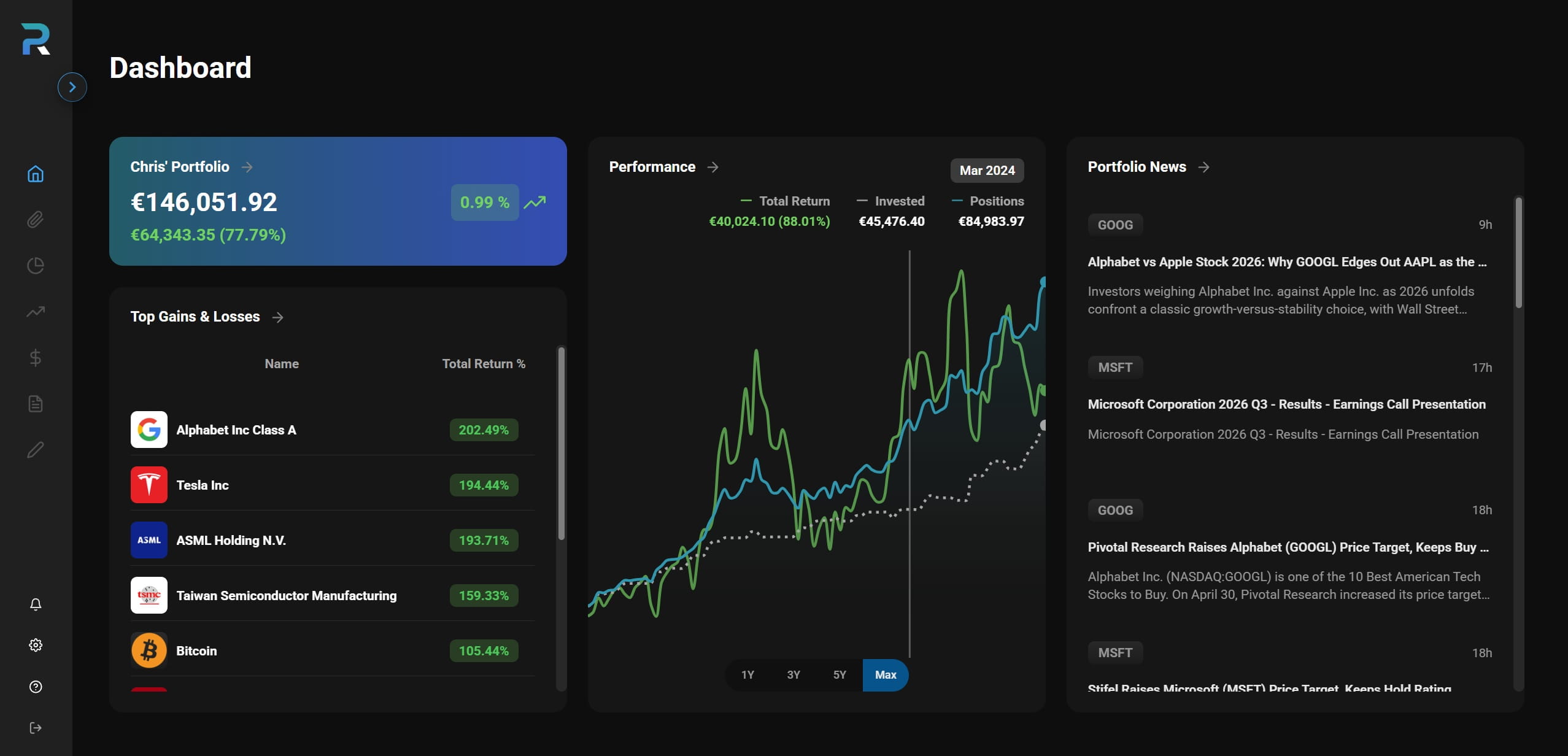

Many investors know the names of their holdings but have less clarity on how those holdings shape the full portfolio. A holdings list can look simple, but the relationships between positions can be more important than the list itself.
Holdings visibility is about context
Seeing what you own is only the first step. The next step is understanding how each position fits into the overall portfolio.
- Which holdings are the largest?
- Which positions have become small enough to barely affect results?
- Do multiple funds or stocks overlap in the same area?
- Are several holdings tied to similar risks?
- Do dividends, crypto, ETFs, REITs, and stocks appear together in one clear view?
Why overlap can be easy to miss
Investors may own several different funds or assets and assume that different names mean different exposure. Sometimes that is true. Other times, multiple holdings may be influenced by similar sectors, regions, currencies, or themes.
Holdings visibility can help investors notice when a portfolio is less spread out than it appears at first glance.
Small positions still need a reason
Small holdings are not automatically a problem. They may represent learning positions, long-term ideas, dividend exposure, or diversification. But if a portfolio has many small positions, it can become harder to understand what actually drives performance.
A useful question is: “Does this holding make the portfolio clearer or more confusing?”
Awareness before action
Holdings visibility does not provide a prediction, recommendation, or trading instruction. It simply helps investors understand what they already own.
For self-directed investors, that awareness can make portfolio reviews more structured, calmer, and easier to repeat over time.