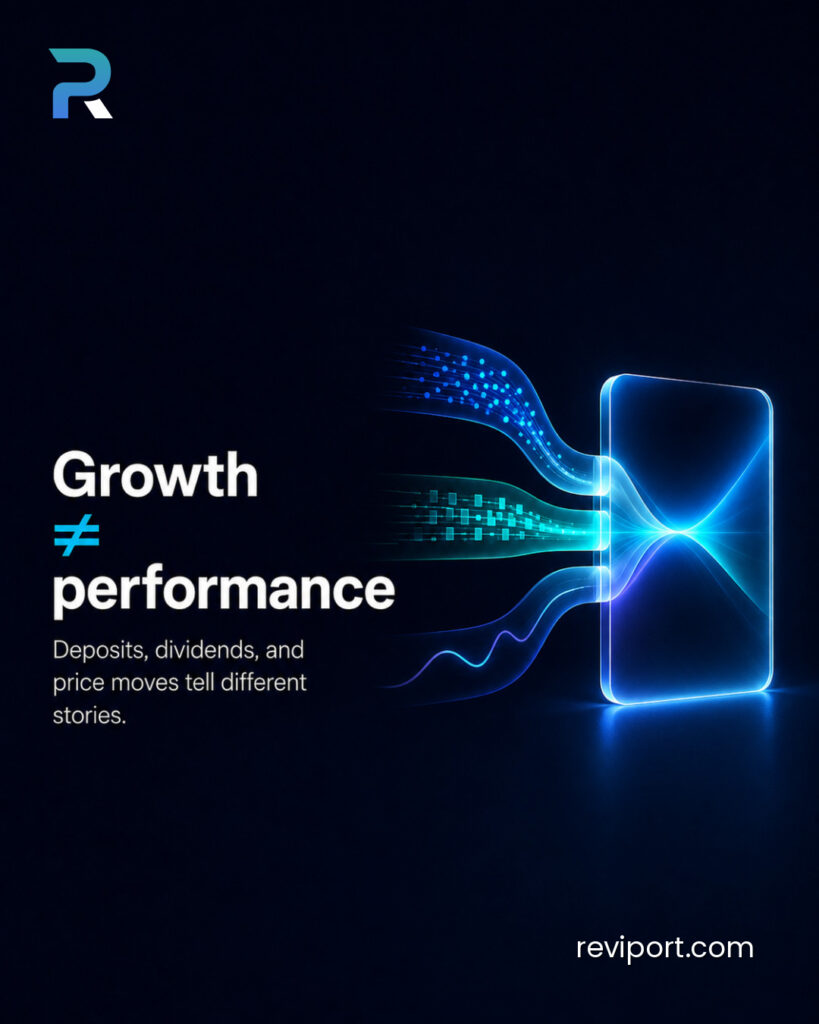
Portfolio growth and investment return are related, but they are not the same thing. For beginner investors, separating the two can make portfolio reviews calmer and more useful.
Why the difference matters
A portfolio value can rise because investments increased in price, but it can also rise because new money was added. A portfolio can also receive dividends, interest, or other cash flows. When all of these are viewed as one number, it can be difficult to understand what actually changed.
This is why a useful portfolio review looks beyond the headline balance. The goal is not to judge every movement as good or bad. The goal is to understand the source of the movement.
Common drivers of portfolio changes
- Contributions: New deposits can make the portfolio balance grow even when investment performance is flat.
- Withdrawals: Removing money can reduce the portfolio value even if some holdings performed well.
- Price movement: Stocks, ETFs, crypto, REITs, and other assets can rise or fall in market value.
- Income: Dividends or interest can add cash to the portfolio or be reinvested.
- Costs: Fees, spreads, and currency conversion costs can affect the final result.
A calmer review question
Instead of asking only whether the portfolio is up or down, investors can ask: what drove the change?
That question helps separate activity from performance. It can also make it easier to notice whether one position, asset class, or cash flow is having more influence than expected.
How tracking can help
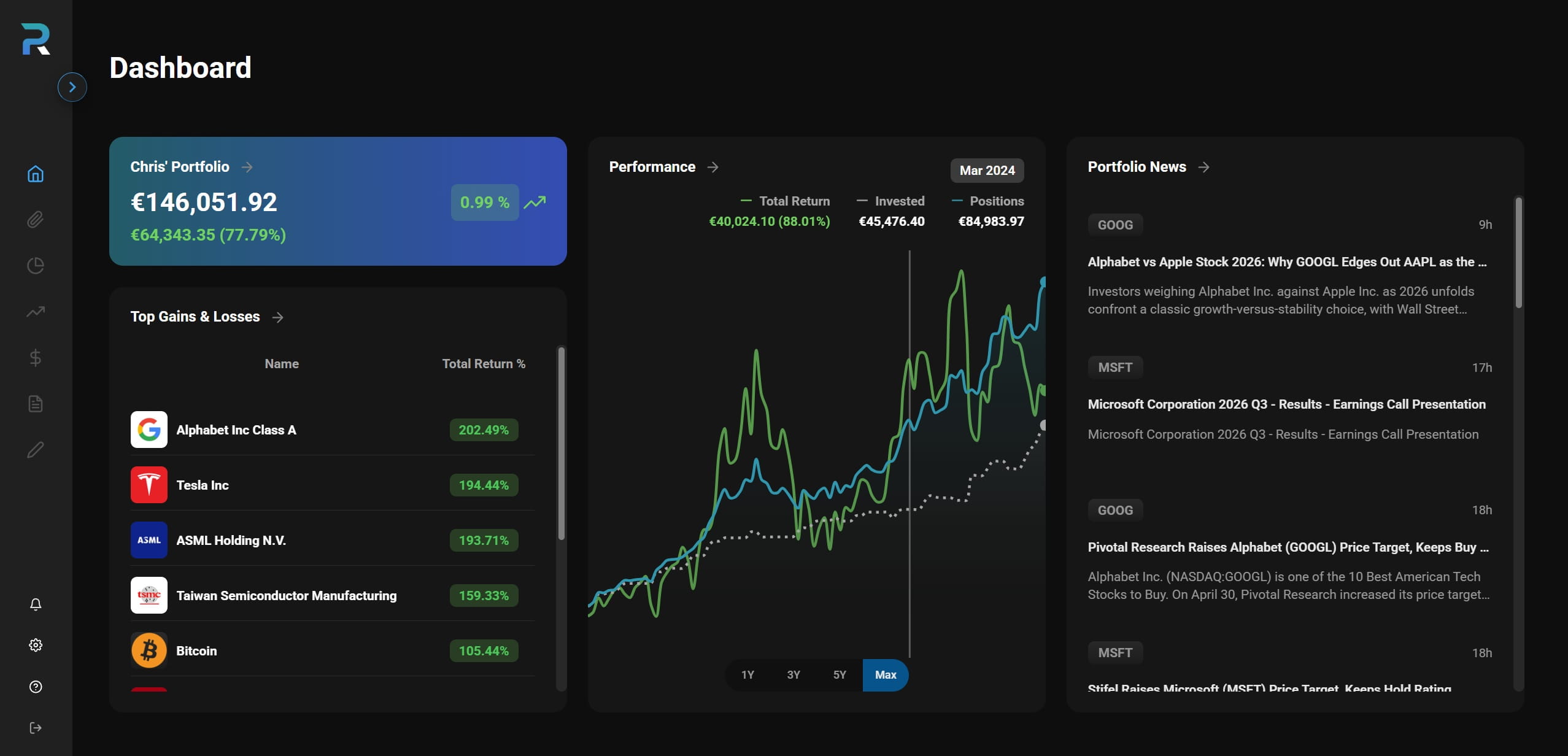
A portfolio tracker can help investors view holdings, allocation, performance, and dividends together. This does not replace personal judgment, and it does not decide what to buy or sell. It simply gives more context so the portfolio is easier to understand.
For long-term investors, that context can be more useful than reacting to a single headline balance.