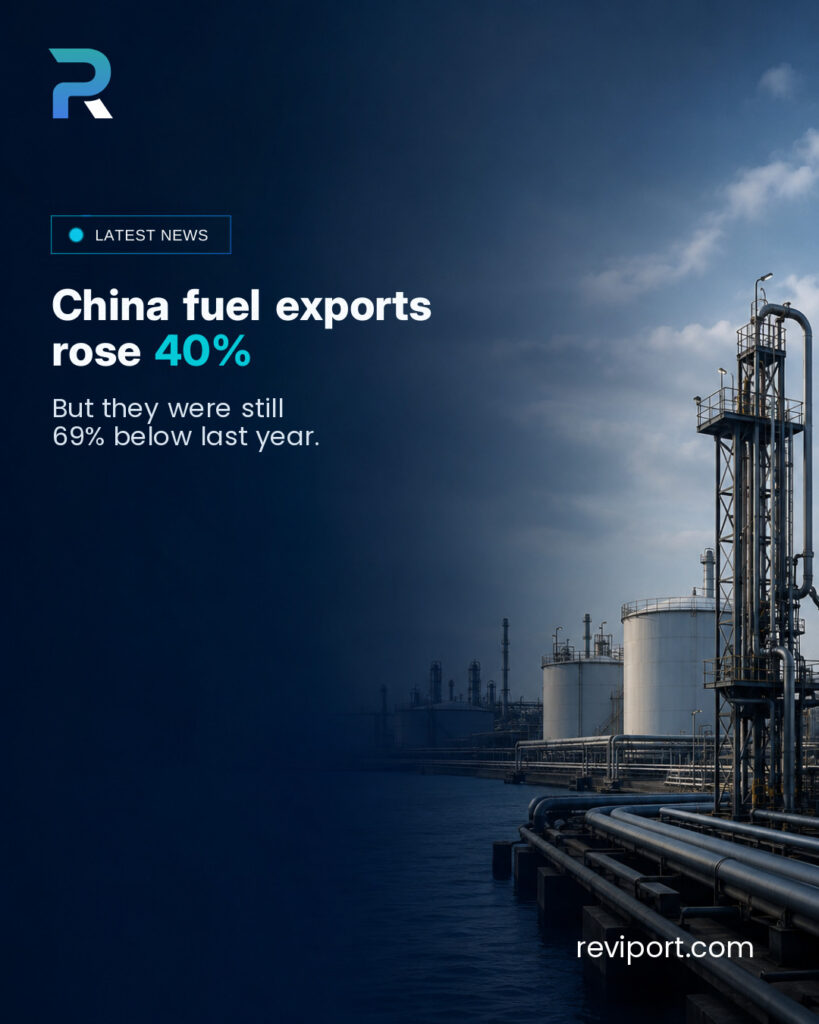
China’s refined fuel exports rebounded in May, but the year-over-year comparison still points to a constrained fuel market.
Reuters reported that China’s refined oil product exports outside Hong Kong and Macau rose 40% from April. Even after that rebound, exports were still 69% lower than the same period last year.
What happened
The May export data covered gasoline, diesel and jet fuel. Reuters reported gasoline exports of 32,838 tons, diesel exports of 216,196 tons and jet fuel exports of 499,388 tons.
That mix matters because refined fuels are used across different parts of the economy. Gasoline connects to road transport, diesel connects to freight and industry, and jet fuel connects to aviation.
Why investors may care
Fuel-market headlines do not only matter to investors who own oil producers.
A portfolio can have indirect exposure through airlines, shipping companies, transport firms, emerging-market funds, inflation-sensitive assets, or companies whose margins move when fuel costs change.
For example, an investor might not own an energy stock directly. But if they own a broad fund with transport exposure, fuel availability and fuel costs can still affect some of the companies inside that fund.
What remains uncertain
The rebound does not mean fuel markets have fully normalized. Reuters reported that export restrictions are still shaping flows, while the International Energy Agency has described tightness spreading from crude markets into product markets after refinery slowdowns.
For portfolio reviews, the useful question is not “what should I trade?” It is: where could fuel-market exposure already exist in the portfolio?
This is educational context, not a buy, sell or hold recommendation.
Sources
- China's May refined oil exports rise from April under restrictions, Australia receives agreed volume – Reuters
- China shipped little fuel to Southeast Asia in April as curbs still bite – Reuters
- Oil Market Report – May 2026 – International Energy Agency